Campaigning = Communicating
I don’t care if you’re a local candidate representing a county or portion thereof. I don’t care if you don’t have an opponent (yet). I don’t care if you’ve raised money or not. Have a website. Have the courtesy to communicate in some detail why you are running and what you hope to accomplish.
Facebook is not a website. Twitter is not a website. Instagram and TikTok are not websites. They are social media channels demanding short, visual posts.
 The use of social media channels varies by age group. Who do you want to reach? Want to reach those aged 18 to 29? According to Pew Research, you should be posting on Instagram: “eight-in-ten adults ages 18 to 29 say they use Instagram”. Nearly every age group uses YouTube. Pew Research continues, “About half of U.S. adults go on Facebook and YouTube daily, 24% do so on TikTok.”
That means about half of U.S. adults do not go on Facebook. If a candidate is only on Facebook and not on YouTube, Instagram or TikTok, that candidate is not connecting with potentially 50% of voters.
YouTube and TikTok are video platforms. Short, 30 second to 1-minute videos work well. Instagram requires a photo or video to post. Every channel demands short posts.
So how can a candidate connect with the details they want to share with voters: a platform, a page for donations, a place for email signups, an appearance calendar?
A website, of course. And, in every social post, include a link to that website. Keep the domain name as relevant and short as possible. It should be in the bio / profile of each social channel so visitors can link to it.
For years, I’ve taught government officials that people want posts coming to where they live online. They’re not coming to look for you. You must go to them. And once you connect on a social channel, lead them to more detail on a website.
And please, please, please test the website and all its links on Chrome, Edge, Firefox and Safari at a minimum. Desktop percentages of use are:
| Chrome | 71.25% |
|---|---|
| Edge | 10.39% |
| Safari | 8.64% |
| Firefox | 5.23% |
| Desktop Browser Market Share in United States Of America – October 2025 | |
And, test it for mobile use (which is likely at least 50% of web visitors). In fact, if you can, design mobile-first. Mobile percentages of use are:
| Safari | 49.4% |
|---|---|
| Chrome | 42.26% |
| Samsung Internet | 3.38% |
| Brave | 1.51% |
| Firefox | 1.44% |
| Mobile Browser Market Share in United States Of America – October 2025 | |
Stats courtesy Statcounter Global Stats
This country is blessed to have elections for those who represent us. A representative republic demands an informed constituency. Candidates should have the common courtesy to inform those they expect to vote for them. A website is a necessity. It should be created before a candidate files to run. It’s the least a candidate can do to build support.
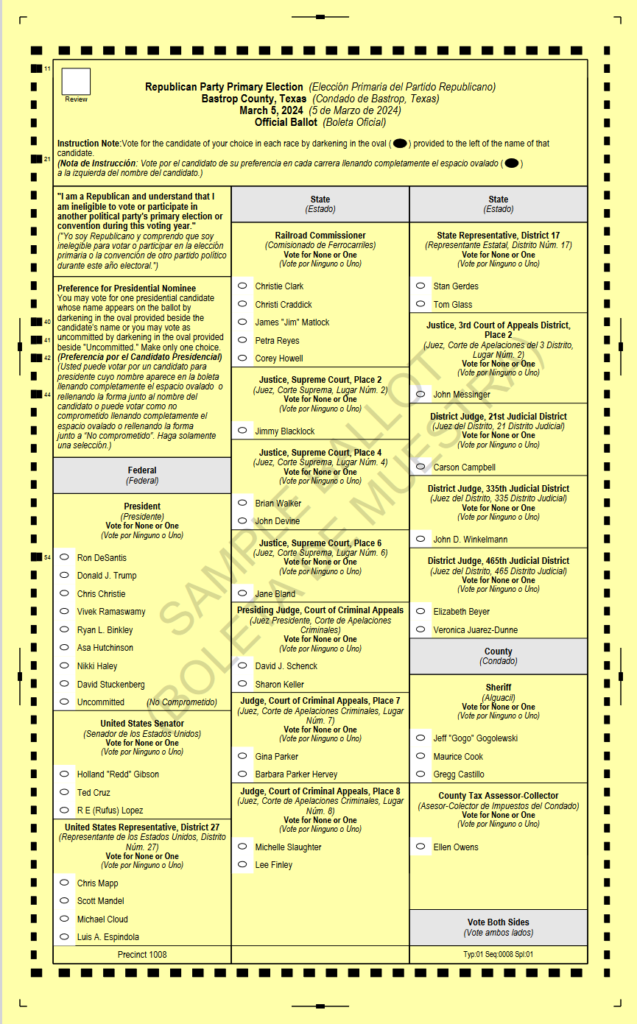
This blog post was written after looking up the websites for all state-wide and local candidates who have filed to run in the Texas GOP primary on March 3, 2026. That list will be published on LostPinesRW.club for voters to access and learn about candidates.

 The first thing I want to know about a candidate is who has donated to them.