Candidates go negative when they think they’re losing. It never fails. They twist facts, publish half-truths, all to make their opponent look like the devil himself (or herself). Instead of explaining to voters why they themselves are best for the job they seek, they want voters to think the worst of their opponent.
I’ve been involved in campaigns since 1987. I’ve run 13 of my own campaigns and lost only one. I’ve been the target of some pretty nasty opposition. So, I know what I’m talking about here.
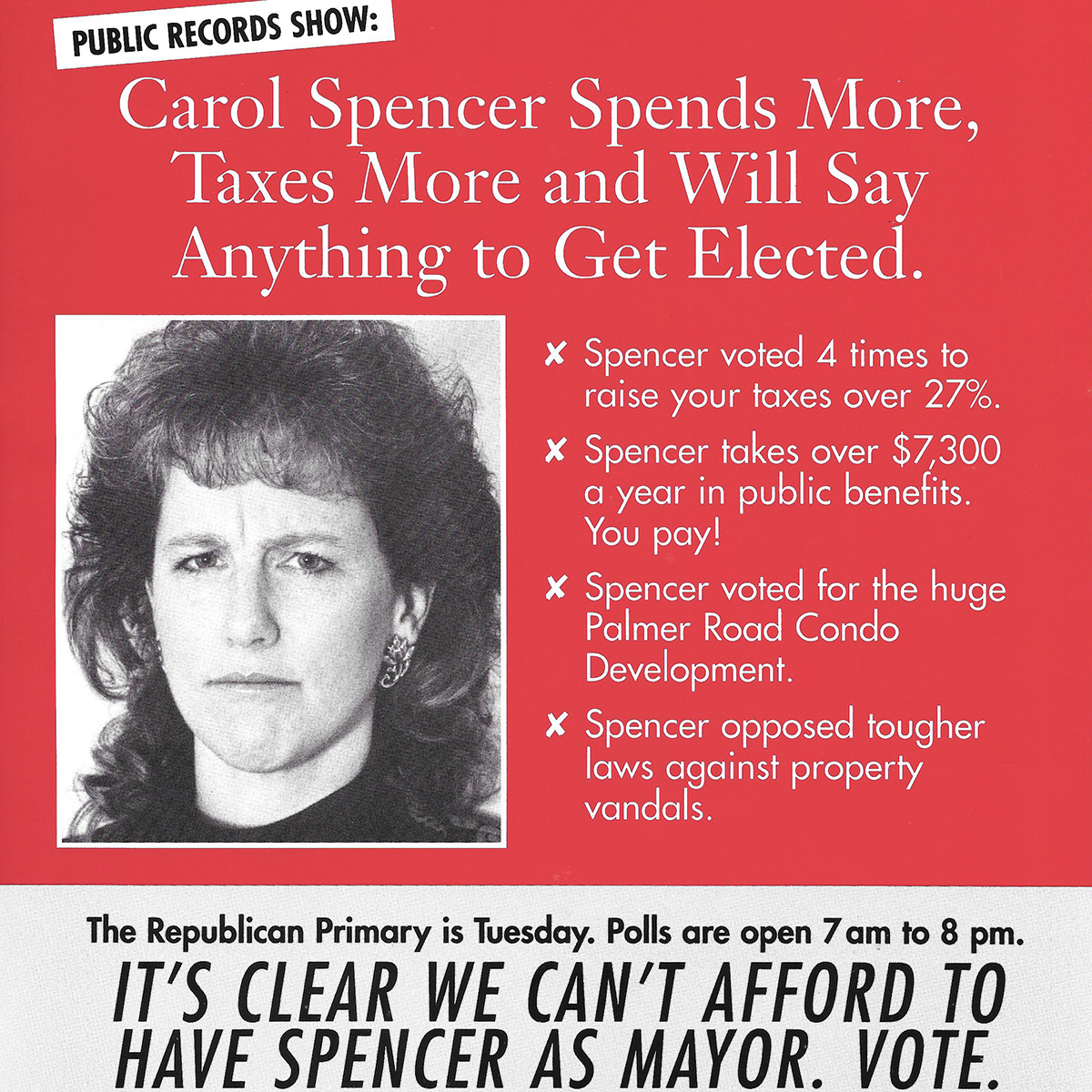 This is a mailer sent town-wide by my opponent for mayor in 1995. These four statements are carefully worded to manipulate the voter. Note the use of bright red and “X” next to each one. Add in the scowling photo (taken when council members were joking around one day) and you’ve got a pretty negative piece.
No, we didn’t vote to raise people’s taxes 27%. We voted for budgets that had increased revenue due to increased development. That huge condo development? It was ordered by the Supreme Court after nearly 10 years of fighting against it. I was treasurer of a citizens group that led that fight.
FYI: Voters saw through this and elected me mayor by a 3:1 margin.
This is negative campaigning. No references. No ordinance numbers. No citations. Just twisted statements to manipulate voters.
You’ve likely received more than a few examples of this with the numerous mailers attacking Tom Glass. They are from Stan Gerdes and the special interest PACs supporting him.
Same story in each one.
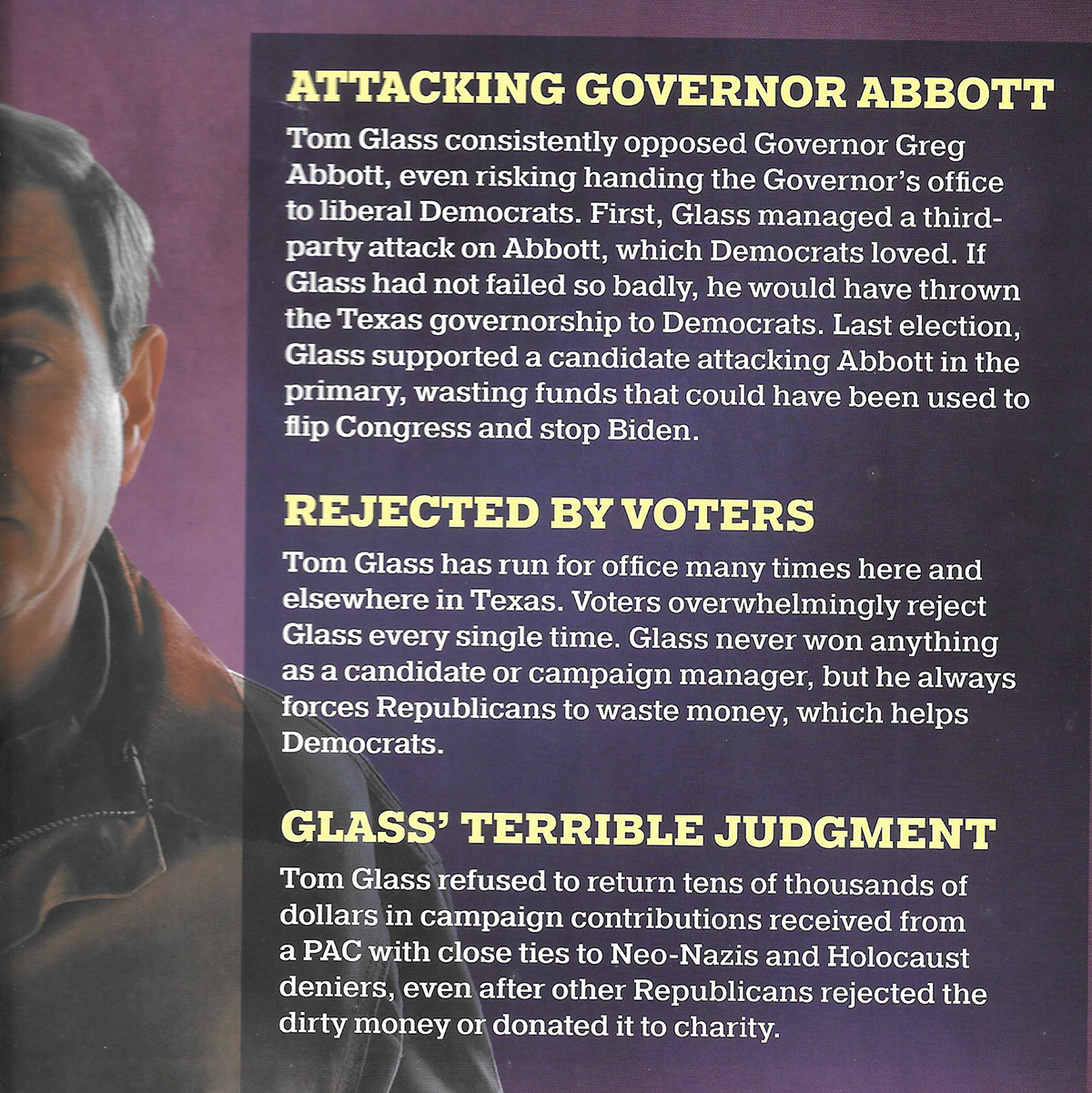 You’re supposed to believe that anyone who runs against an incumbent, Governor Abbott in this case, risks “handing [that office] to liberal Democrats”. Is Stan against giving you a choice in a primary? Sure sounds like it.
You’re supposed to believe that the thousands of dollars contributed to Tom Glass are forced. What do campaign contributions have to do with the job of TX House member anyway? Nothing. So why is he raising the issue?
You’re supposed to believe that Tom’s a neo-Nazi because of donations from an unnamed PAC. Why not name the PAC? Likely Stan’s concerned about a lawsuit.
On the other side of the coin, you read that “Stan passed”, “Stan banned”, “Stan stopped”. No, Stan did not do any of those things. Stan voted along with many other TX House members. Sharia Law has not been banned. Islamic developments have not been stopped.
There are those who think that making others look bad makes them look good. That’s exactly what negative campaigners hope to do. They know you won’t take the time to research their statements. They “walk the fence without falling off”, stating things in such a way that they’ll pass legal muster, but they’ll also manipulate people into voting for them. They pay a lot of money to campaign consultants to do just that.
As I’ve said before: beware campaign literature. Most especially, beware negative campaign literature. In fact, just throw it in the trash. It’s worthless to your vote decision-making.

 The first thing I want to know about a candidate is who has donated to them.