Look for out-of-state donors, lobbyists, other candidates, Political Action Committees (PACs), leadership (like TX House speaker, Washington leadership PACs).
Filers who run for and/or hold statewide offices and multi-county offices that may include Governor, Lieutenant Governor, Attorney General, Comptroller, Railroad Commissioner, Land Commissioner, Agriculture Commissioner, State Chair of political party, Texas Senate, Texas House of Representatives, Multi-county District Attorney, State Board of Education, Supreme Court Justice, Court of Appeals Justice, Court of Criminal Appeals Judge, and district judges must file with the Texas Ethics Commission (TEC). (emphasis added)
These candidates file their financial reports with the Texas Ethics Commission on a schedule set by law.
Filers who run for and/or hold local offices, before they can raise or expend any money, must “file a campaign treasurer appointment, even if the candidate does not intend to raise or spend money. [They] are permitted to appoint [themselves] as [their] treasurer.” If they have run before and not filed a final report, they do not have to re-file another appointment of a campaign treasurer form.
Just by following the money, you’ll be able to tell which are the people’s candidates and which are the establishment, donor class candidates. Happy searching & learning!
There’s an election coming up on March5. Early voting starts February 20. How will you choose which candidates align with your beliefs?
Find your sample ballot.
You can do that on BastropVotes.org. Enter your last, first names and your birthdate. You’ll get this screen:
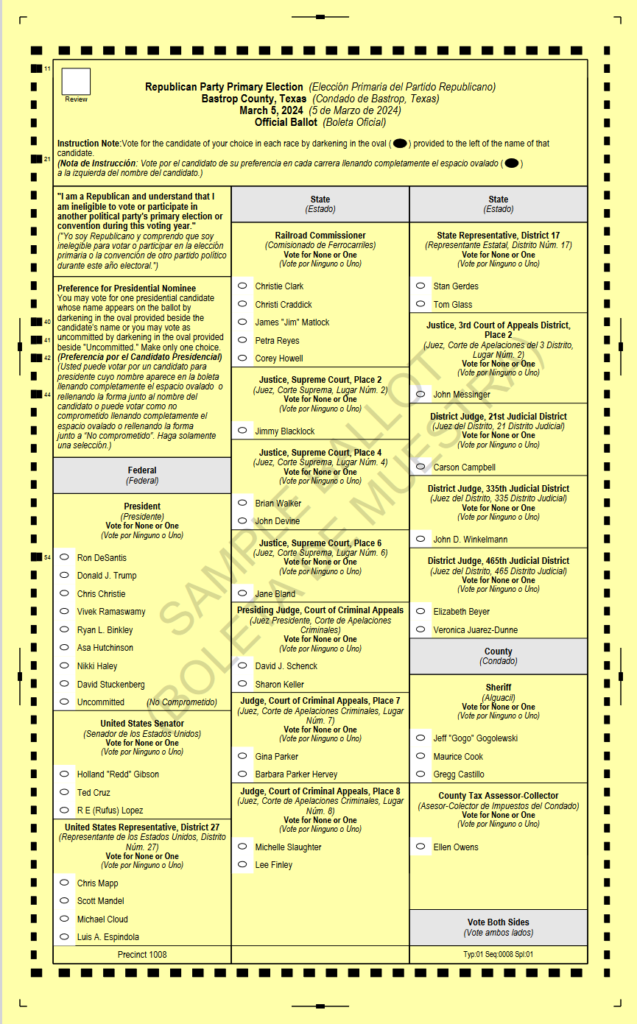
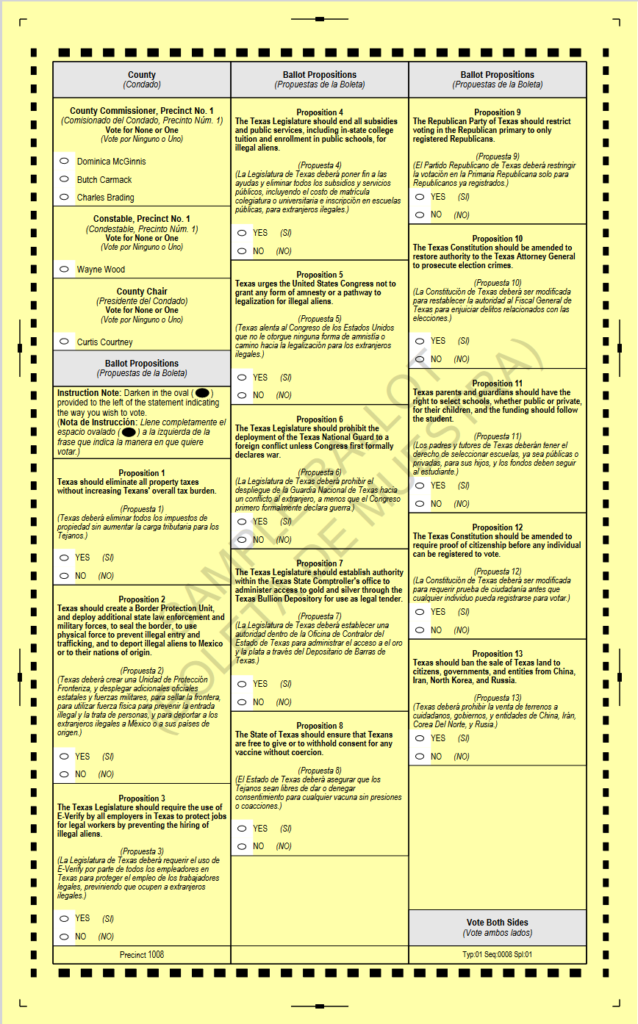
If you were to choose the Republican ballot, and IF you live in Precinct 1, you’d get this ballot. If you live in a different precinct or choose a Democrat ballot, your ballot will have different choices. Depending on your printer, choose “print to fit”, black & white printing, and print single sided (turn off duplex).
Sample Ballot PG 1Sample Ballot PG2
Go through the ballot and check off or circle those races where you already know who you’ll be voting for.
Did you know you can take the sample ballot into the polls with you? You can. Just don’t leave it behind after you vote.
I typically do not pay attention to a candidate’s materials. Many candidates hire political consultants who design their websites and mailings. They sometimes do polling to see what issues resonate with voters. Then they “wordsmith” every line and every sentence. It’s important to “watch what they do, not what they say”.
Follow the money.
County & Local Candidates
The first thing I want to know about a candidate is who has donated to them.
County and local candidates file their finance reports with the County Elections Administrator. You can find them here: https://www.bastropvotes.org/elected-officials/campaign-finance-reports/ Candidates must report all donors over $110 from any one individual in the reporting period. You’ll get a pretty good idea of the source of their campaign funding.
Sometimes, though, candidates fail to file these reports. That’s a violation of law, totally refutes any comments they make about transparency (in my opinion).
The Texas Ethics Commissionsets the required dates for finance reports: quarterly were due January 16, the 30-day prior were due February 5, and the 8-day prior are due February 26. ALL candidates must meet these filing deadlines.
State Candidates
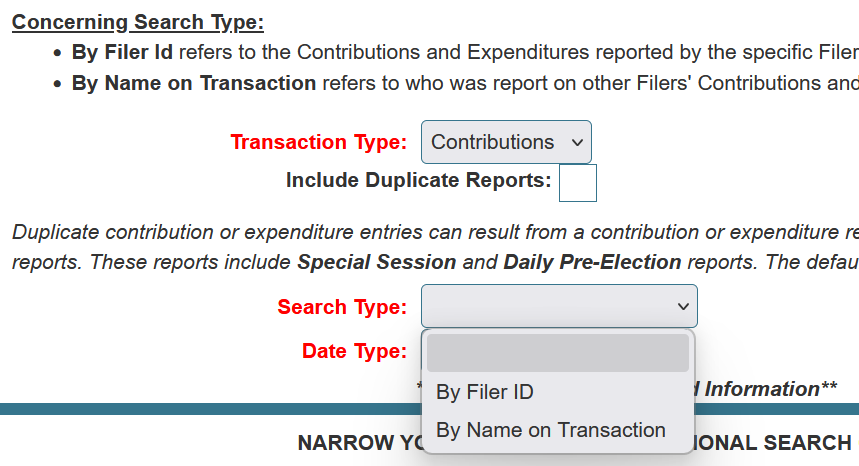
State candidates file with the Texas Ethics Commission. Reports are public. Finding and viewing reports is a bit daunting at first, but doesn’t take long to get the hang of it. You use the simple search to find the candidate’s “filer id”. Once you have that, you can do an advanced search for all contributions for that “filer id” or candidate. You can download them as a spreadsheet and from there sort by donor. That will give you a very clear picture of whether a candidate is getting his/her money from out of state, from PACs, which PACs, or from individual donors.
Federal Candidates
Federal candidates are required to follow the rules set by the Federal Election Commission. They are different than state rules and have different filing deadlines. You can see a federal candidate’s donors by visiting the FEC Campaign Finance Data page online.
Generally…
TryOpenSecrets.org. This independent non-profit website will show you donations to state and federal candidates, or you can search by donor. The advanced search allows a more detailed “deep dive” into the data. OpenSecrets has launched a new lobbying data section. If you want to know who is influencing the elected officials that represent you, and those in leadership positions, spend some time looking around this website.
Money is important in politics. Races are expensive. But how much influence will large donors have over a candidate if elected? Once you know who the PACs are, do some research on the PAC. Who runs it? What are their goals? What other candidates receive money from them?
It takes some time, but isn’t your community, your state, your country worth it?
 It’s that time again. Candidates must file to run in the March 2026 primary no later than December 8. As I’ve written before, where candidates get their campaign funds will tell voters a lot about a candidate’s loyalties should they get elected.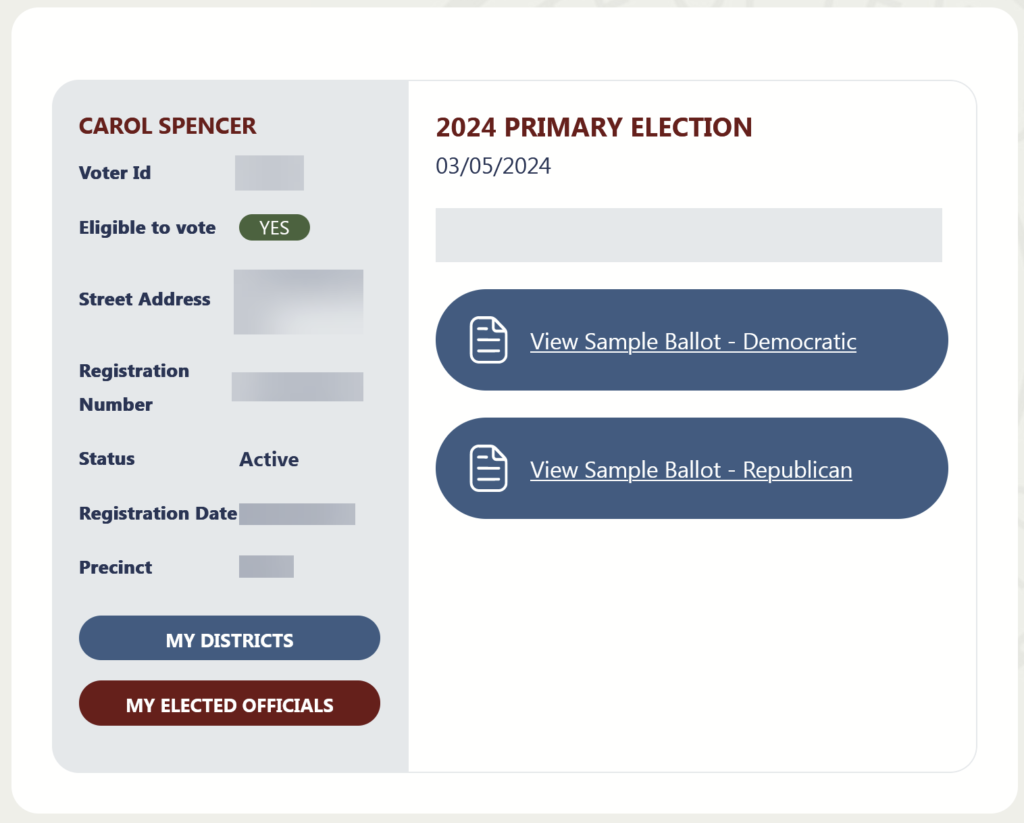

 The first thing I want to know about a candidate is who has donated to them.